
If you count yourself amongst highly sensitive people, also known as HSPs, count me in. You might get something from reading this if you struggle with heightened sensitivity in the workplace.
Highly Sensitive People: Building Emotional Resilience At Work
The concept of highly sensitive people is receiving far more attention today than it did even a decade ago.
As research into psychology, neuroscience, and human performance grows, we’re beginning to understand that there are more highly sensitive people out there than we thought.
Research shows that approximately 10-35% of people are born highly sensitive.
As a Highly Sensitive person or HSP, I don’t view high sensitivity as simply a neurological condition.
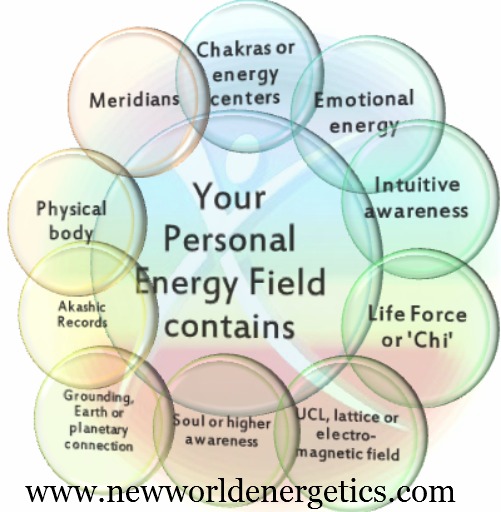
I know that it also creates energetic patterns that influence how we respond to people, pressure, and change in the future.
Everyone experiences trauma, but highly sensitive people experience it more intensely and take longer to recover than those who are not as sensitive.
The encouraging news is that these patterns can be recognised and understood.
Resource: The Highly Sensitive Person, Elaine N. Aron, Ph.D
When Emotional Survival Becomes the Default
Many of us grew up in families or cultures where emotional resilience meant suppressing emotion rather than processing it, whether we are highly sensitive or not.
I was raised in a small British village by parents whose own childhoods were shaped by hardship. As young adults during the Second World War, they learned to survive by carrying on regardless. That attitude was passed down to me.
One well-known phrase summed up my family’s culture perfectly:
“Keep a stiff upper lip.”
The message was clear: remain calm, carry on, and don’t let anyone see your pain.
At the time, this approach served an important purpose. It helped people survive extraordinary circumstances.
But survival strategies that protect us in one season of life can limit us in future seasons. And if you are highly sensitive, some of your innate gifts, skills, and abilities could become more limited than most without help, or if left in negative environments.
Importantly, although highly sensitive people are more likely to struggle under stressful circumstances, they are also especially receptive to positive and supportive experiences. Those who are low in sensitivity, on the other hand, tend to be more resilient when facing adversity but also benefit less from positive experiences.
Sensitivityresearch.com
Highly Sensitive People – How Environment Influences Your Energy
At work, highly sensitive people have a lot more energy to process as they move through the world.
From an energetic perspective, other people’s energies shape how we interact with the world.
If you count yourself amongst highly sensitive people, you may find yourself: –
- avoiding difficult conversations
- becoming overly responsible for other people’s emotions
- struggling to trust your intuition
- reacting strongly to criticism
- feeling constantly alert, even when life is relatively calm
- finding it difficult to relax.
These are often intelligent adaptations rather than personal weaknesses, because they help you navigate environments that may feel unpredictable or unsafe.
While we may act this way to stay safe, highly sensitive people also have nervous systems that can read the room in high levels of detail. So, we may be reacting to environments at work that not everyone can perceive – and having to process all of that energy, too!
Over twenty years of academic research indicates that if you are highly sensitive, you were most likely born highly sensitive. You did not become an HSP overnight; you have always been this way.
This can be an advantage, but also a huge stressor.
The Highly Sensitive Person in the Workplace
Highly Sensitive People (HSPs) often process information more deeply than others.
This can become a significant advantage in leadership, communication, innovation, and decision-making. Yet sensitivity also means that stress, conflict, and emotional tension may be absorbed more intensely.
Many sensitive people become experts at reading a room while simultaneously hiding their own experience. I know I still do this.
Looking back, I can recognise several strategies that helped me feel safe:
- becoming emotionally invisible
- keeping a neutral expression regardless of what I was feeling
- blending into groups rather than standing out
- spending long periods alone to recover
- escaping into books, television, or imagination
- pretending everything was fine when it wasn’t
- ignoring bullying or difficult behaviour instead of addressing it.
These responses were intelligent survival strategies when no other options were available. Of course, some of these strategies are adopted by everyone at some point in time – whether you are highly sensitive or not.
I remember one male boss saying, “You say ‘Hmmm’ a lot when asked for your opinion, Sarah; you should learn to speak up in meetings.” This was a boss that used to try and touch me inappropriately, so of course, even as a Manager, I wasn’t going to let my guard down with him in any environment.
The question is when these strategies are appropriate, and when they limit our creativity and growth as highly sensitive people.
Resource: Blog Post – Dealing with Difficult People: Energetic Approaches to Strengthen Your Leadership
Reconnecting With Your Inner Resources
One of the most helpful ideas I’ve explored is viewing ourselves as containing many different aspects that developed throughout life.
Our younger selves learned ways to stay safe when needed.
Our adult selves often continue using those same strategies long after the original danger has passed. Rather than seeing these parts as broken, I see them as carrying valuable information.
Healing comes through integration rather than rejection, and delving into our shadows and limitations, rather than hiding them, as long as it is safe to do so.
As we become more aware of these different aspects of ourselves, we gain greater choice in how we respond to life’s challenges.
Instead of automatically reacting from old survival patterns, we can begin learning to respond from greater clarity and presence.
Resource: Psychology Today – High Sensitivity is not a Trauma Response
Daily Practices That Increase Emotional Capacity For Highly Sensitive People
Highly sensitive people often benefit from consistent practices that regulate both the nervous system and personal energy.
Simple daily habits can make a significant difference:
- meditation or mindful breathing
- reflective journaling
- yoga, tai chi, or qigong
- walking in nature
- quiet time away from constant stimulation
- regular self-reflection
These practices don’t remove life’s challenges.
They increase what I call your capacity—your ability to remain centred, think clearly, and make intentional choices even during difficult situations.
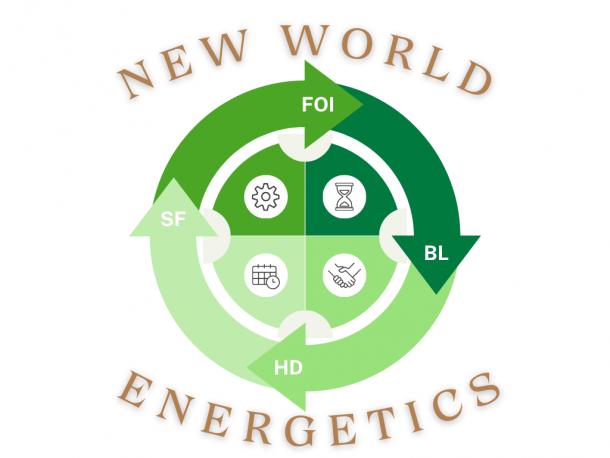
One of the 4 Quadrants in my business energetics approach is to work with your Success Flow, working with the Success Codex™ chart.
The Success Codex is a system that clearly identifies your strengths when aligned in 13 different business areas, as well as your blocks, too. I believe both aspects are equally as useful. We all need to know exactly where we get stuck, so that we can create workarounds.
You’ll also discover ways to work with your capacity – which is literally about understanding how much energy you have to do what it is you need to get done at work, or in life.
Learn more about the 4 Quadrants and the Success Codex by signing up for my email learning series.
A New Way Forward
If you’ve experienced trauma, it doesn’t define who you are. Often, massive growth follows after healing from a traumatic event. Many of the behaviours developed during that time were intelligent responses to help you survive. There is gold there, if we can only find it.
Don’t continue to allow those patterns to limit your wellbeing, your relationships, your leadership, or your success. Also, it’s time for the sensitives to expand our capabilities in the world. We have historically been under-utilized, but we are here, and we have amazing skillsets.
Working with the 4 Quadrants offers a practical way of understanding your unique skillset as a sensitive across the physical, mental, emotional, and energetic dimensions, as well as delving into your unique way of perceiving the world.
As your awareness grows, resilience will grow alongside it.
I would say to you, “Don’t ever try to become less sensitive.” People with high sensitivity are naturals at working with Field Intelligence.
You become more capable of using your sensitivity as one of your greatest strengths rather than experiencing it as something that needs to be managed. That is one of the major keys to growth for highly sensitive people.


ive known im an empath for many years. I have a connection to plants and animals. I feel others emotions, can pass by someone I don’t know and break out in tears of sadness.. I feel to much.. I also have had a traumatic childhood which resulted in PTSD of my own. taking medication for this blocked my ability to meditate. recently, I was just taken off because of the damage it has caused my kidneys. But I can and do meditate and have seen things in a different perspective. I, myself right now in a very difficult situation I have no direction to turn, I have meditated and been told to step back and look at the whole picture. I have, I didn’t like what I saw and felt. And now I am being forced into a situation I do not wish to be in. but if I don’t choose one, I will be left homeless. I don’t even have a car. even with all this hitting me all at once I can still be grateful for what I do have at this very moment. I feel being pushed in a direction, no matter where I turn, will be bad for me. Im at a standstill. My ex husband is at the bottom of all this and is being very full of hate for actions he did that propelled me into taking an action I had to take TO SAVE MY OWN LIFE AND SELF BEING.
Hi Patricia
I am so sorry that you are in this place. Empaths had our place in tribal societies, where we could help others know if the lion was behind the bush, when the buffalo was coming, or why somebody’s foot was hurting. We were valued (mostly) and seen for what we are capable of.
In the last 5,000 years or so, this has changed and we are often vilified and destroyed in one way or another for our ability to process energy and carry truth. I believe we are the bridge generation. As we move into the Aquarian Age, the strength and resilience of the Empath’s way of knowing truth will once again be honored. The woman as Shaman will be accepted (once again, as it was before). And more balance will be brought to the world. Sending you lots of light during your difficulties.