Diversity and inclusion in business is a necessity, not a choice, for business success.
We Are More Connected Than We Think
How can we get clearer and more focused about the necessity of being aware of diversity and inclusion in business? First of all, we need to remember how connected we all are.
A few years ago I read an article in People magazine about the World Family Tree.
(Yes, I’ll admit it—I enjoy People magazine. Alongside the celebrity stories are surprisingly universal human experiences that reveal the same patterns, challenges, and lessons we all encounter. It’s fascinating “mental wallpaper.”)
The article described author A.J. Jacobs’ work with scientists to help assemble one of the largest family trees ever created, connecting more than 260 million people.
While that represents only a fraction of the world’s population, the project illustrates something remarkable: the more we learn about our ancestry, the harder it becomes to believe we are truly separate from one another.
For leaders and organisations, this has implications that go far beyond genealogy, and reflects our need for conscious awareness of diversity and inclusion in business.
Learning how we are all truly connected challenges how we think about diversity, inclusion, belonging, and ultimately, how we work together.
A.J. Jacobs later documented the journey in It’s All Relative: Adventures Up and Down the World’s Family Tree, available on Amazon.
From his research, he drew five simple conclusions that offer surprisingly useful lessons for business.
1. Every Family Has Its Black Sheep
Jacobs suggests that nearly every family has someone who broke the rules, made mistakes, or took an unexpected path.
Realising this often makes us a little less judgemental of others.
I remember telling my mum I was getting divorced. She simply replied,
“That’s alright dear, remember your dad was divorced when he met me.”
I’d completely forgotten. Sometimes life repeats patterns we never expected to experience ourselves.
When we recognise that every family carries challenges, it becomes easier to approach others with curiosity rather than criticism.
The same applies in business. After all, Richard Branson left college halfway through his studies, and started his first business, Virgin Records, in a British phone box. He decided to break a business paradigm, and his maverick approaches to business have continued to succeed ever since.
People arrive with different experiences, different strengths, and different stories. Effective leadership begins when we stop assuming we know someone’s journey.
Understanding the perspective of the Field of Intelligence helps us to soften our judgments. We begin to see patterns rather than labels, creating space for wiser decisions and stronger relationships.
2. Our DNA Carries Ancient Connections
One surprising finding from genetic research is that many people carry a small percentage of Neanderthal DNA.
Whether it’s 1% or 3%, the exact number matters less than what it represents.
Our bodies carry an extraordinary history stretching back thousands of generations.
As a fan of Jean M. Auel’s Clan of the Cave Bear, I found this particularly fascinating.
Years ago, during a past-life regression, I experienced communicating through clicking sounds in what felt like an ancient tropical landscape. Whether symbolic or literal, the experience reminded me that human communication has always evolved.
Science explores these connections through genetics.
The Field of Intelligence explores them through consciousness.
Perhaps both are pointing toward the same truth—that we are part of a much bigger story than our current lifetime alone.
3. Diversity and Inclusion in Business: Part of Networking
Jacobs joked that discovering distant family links opened unexpected doors—including arranging lunch with President George H.W. Bush.
While few of us will need that particular connection, the broader lesson remains powerful.
The more we trace human relationships, the more impossible separation becomes, and the better we can network for the future of our businesses.
In organisations, this is equally true, since departments influence departments – and teams influence teams.
A leader’s mindset influences the entire culture. Whether we recognise it or not, every organisation functions as an interconnected system.
4. Human Separation Blocks Innovation
Henry Louis Gates famously observed:
“There’s no such thing as racial purity.”
Modern DNA research continues to reinforce this.
Many people who take ancestry tests discover unexpected heritage from cultures they never imagined were part of their story. These discoveries can be wonderfully humbling.
They remind us that identity is often far richer and more complex than the labels we inherit.
For organizations committed to diversity and inclusion in business, this matters.
Inclusion isn’t simply about representation; it’s about recognising that every person brings a unique combination of history, experience, perspective, and potential to the table.
When we appreciate those differences rather than fear them, innovation naturally follows.
Subscribe to my newsletter and free email learning series to find out more about the Field of Intelligence, Business Lattice, Human Design, and how your Success Flow can be used as a structure to move your business forward.
5. The Human Family: An Example of Diversity and Inclusion in Business
Science increasingly demonstrates that humanity is deeply interconnected.
Yet many individuals and organisations still operate from unconscious assumptions of separation.
Some of these biases are cultural, and some are historical. To truly grow sustainable business for global markets, we must learn to challenge and replace inherited ways of thinking that have been ignored or left unquestioned.
The Field of Intelligence offers that perspective.
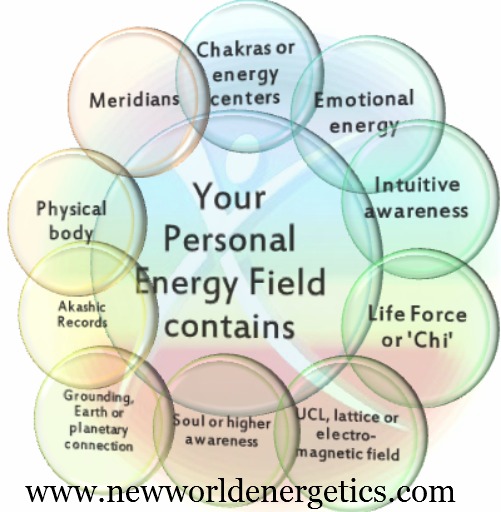
Each person’s energy expresses a unique frequency, yet every individual contributes to a much larger whole.
Interestingly, modern genetics tells a remarkably similar story. They prove scientifically that we are all unique, yet we are all connected.
The more we understand both truths, the more inclusive our leadership becomes.
Final Thoughts On Diversity and Inclusion in Business
Perhaps diversity and inclusion are not simply organisational initiatives.
Perhaps they are reminders of something humanity has always known, but occasionally forgets.
Our DNA tells one story, and the way we’ve separated the collective Field of Intelligence tells another – both suggest that separation is far less real than connection.
When leaders recognise this, they build workplaces where people feel seen, valued, and able to contribute their best.
And perhaps that’s the real lesson hidden within the World Family Tree, and the nature of diversity and inclusion in business.